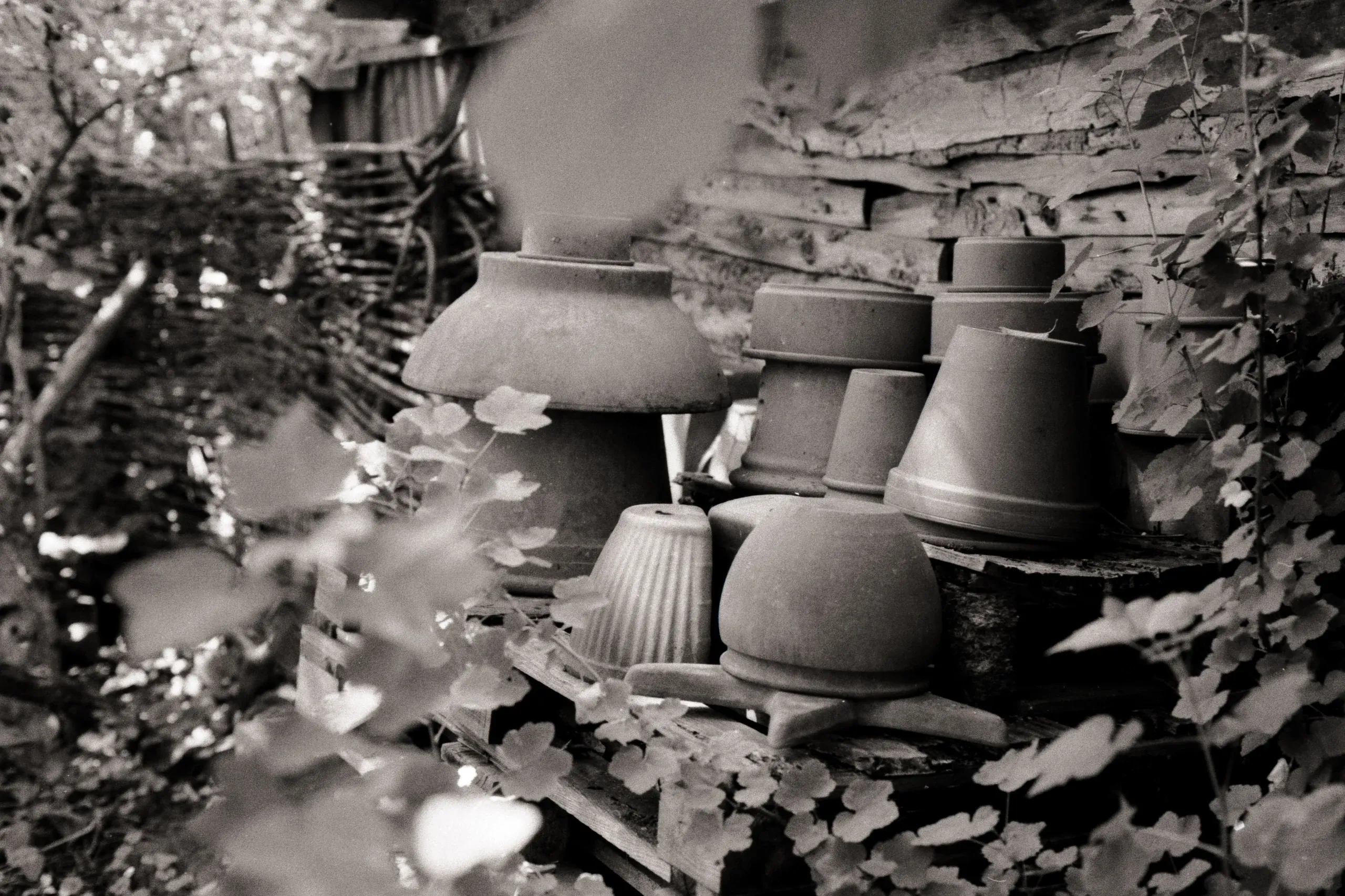
In mid-June, my wife and I visited Klaus Klasen in Troisdorf-Müllekoven. He had opened his rose and willow garden for the 2026 Open Garden Day. It was a warm, sunny day, and pleasantly cool in the shade of his garden. Klaus gave us a warm welcome and took the time to answer our questions.
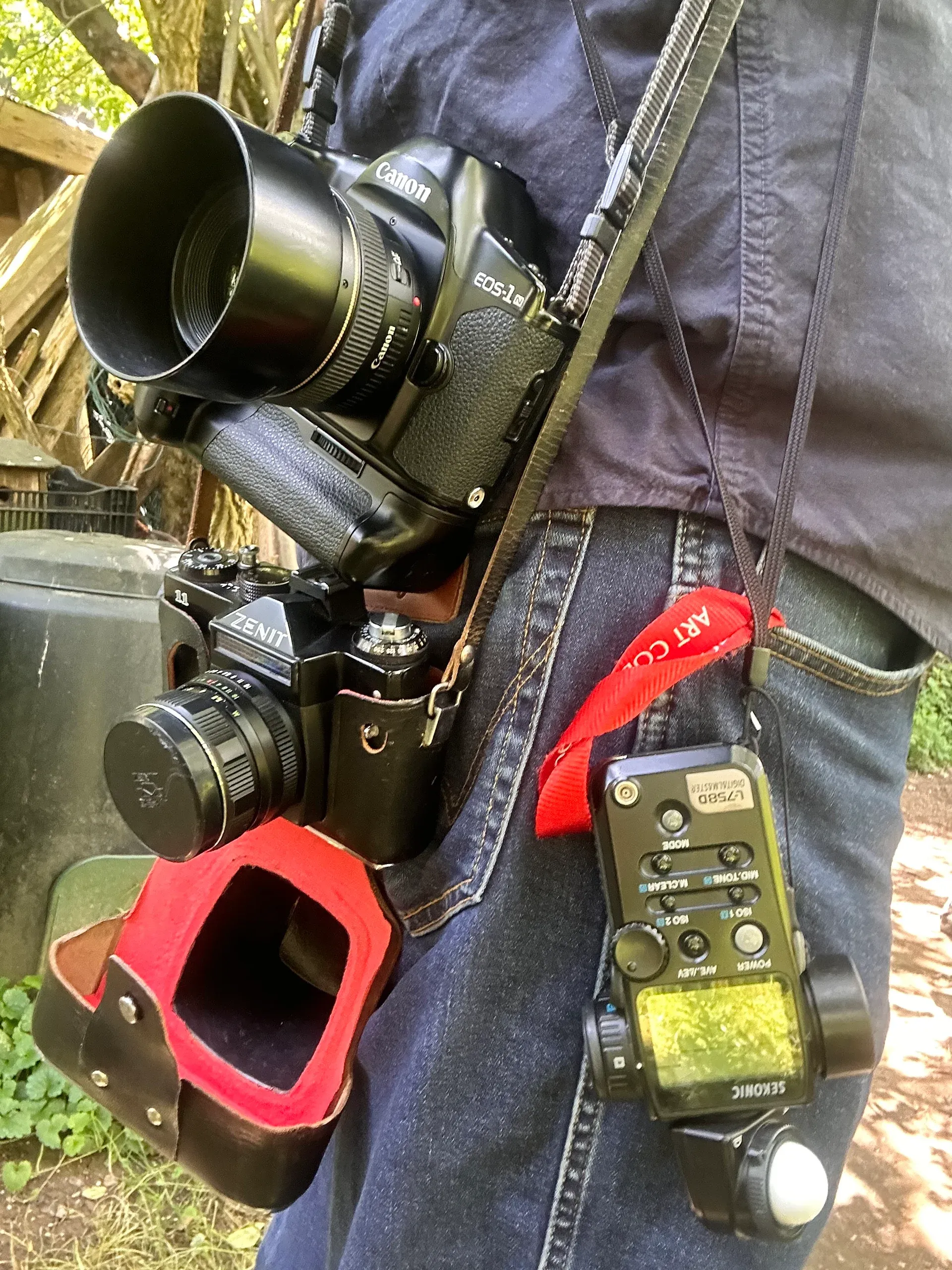
I had my Zenit 11 with me, equipped with the Helios 44M-4, a 58-mm lens with a maximum aperture of f/2. I had loaded it with Lucky 400 film. Photographing a garden on black-and-white film might not be the most obvious choice. This garden looks magnificent in color. This time, I was particularly interested in the woven structures and the question of how their forms stand out among all the branches and leaves in the image.
Woven Forms Among Branches and Leaves
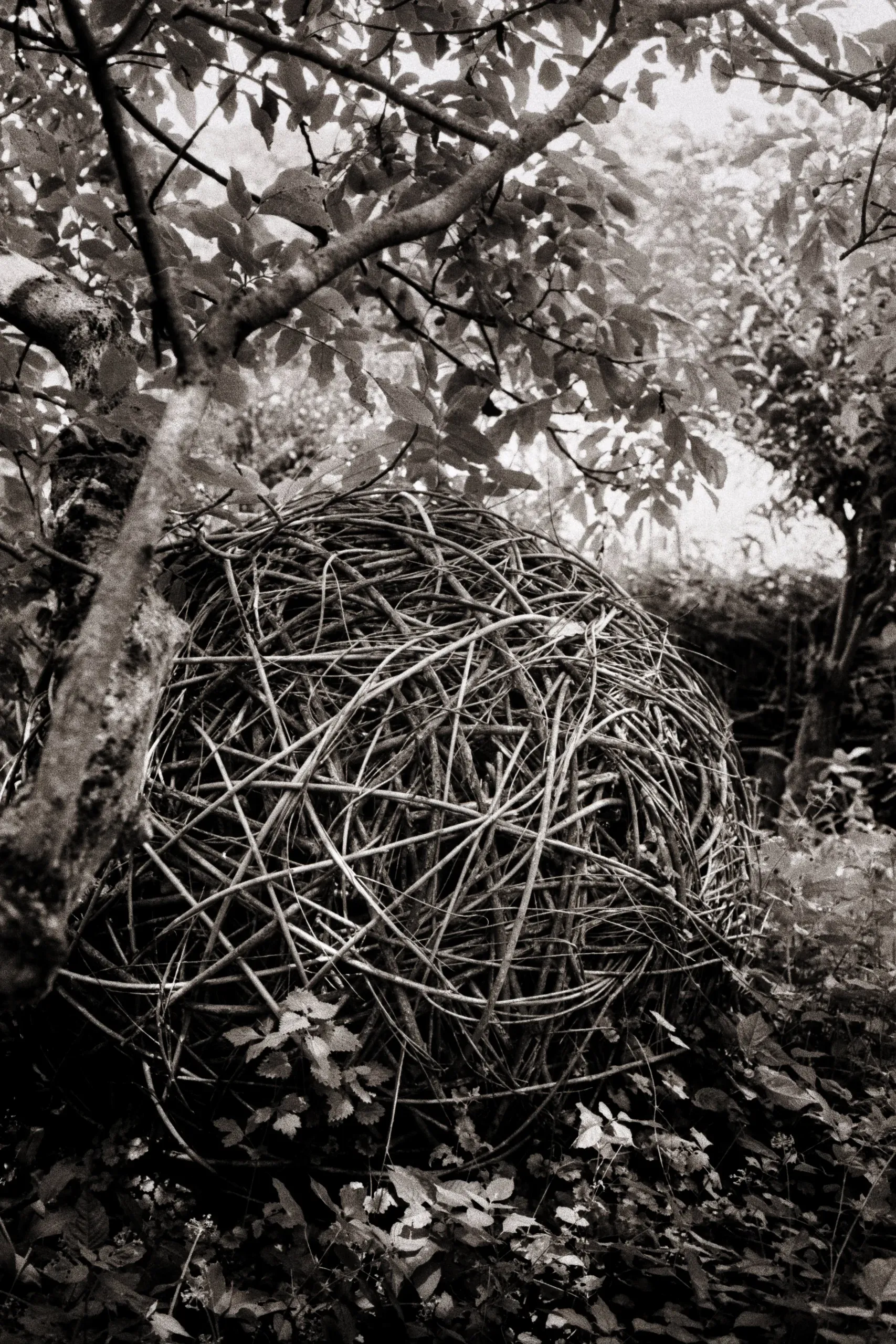
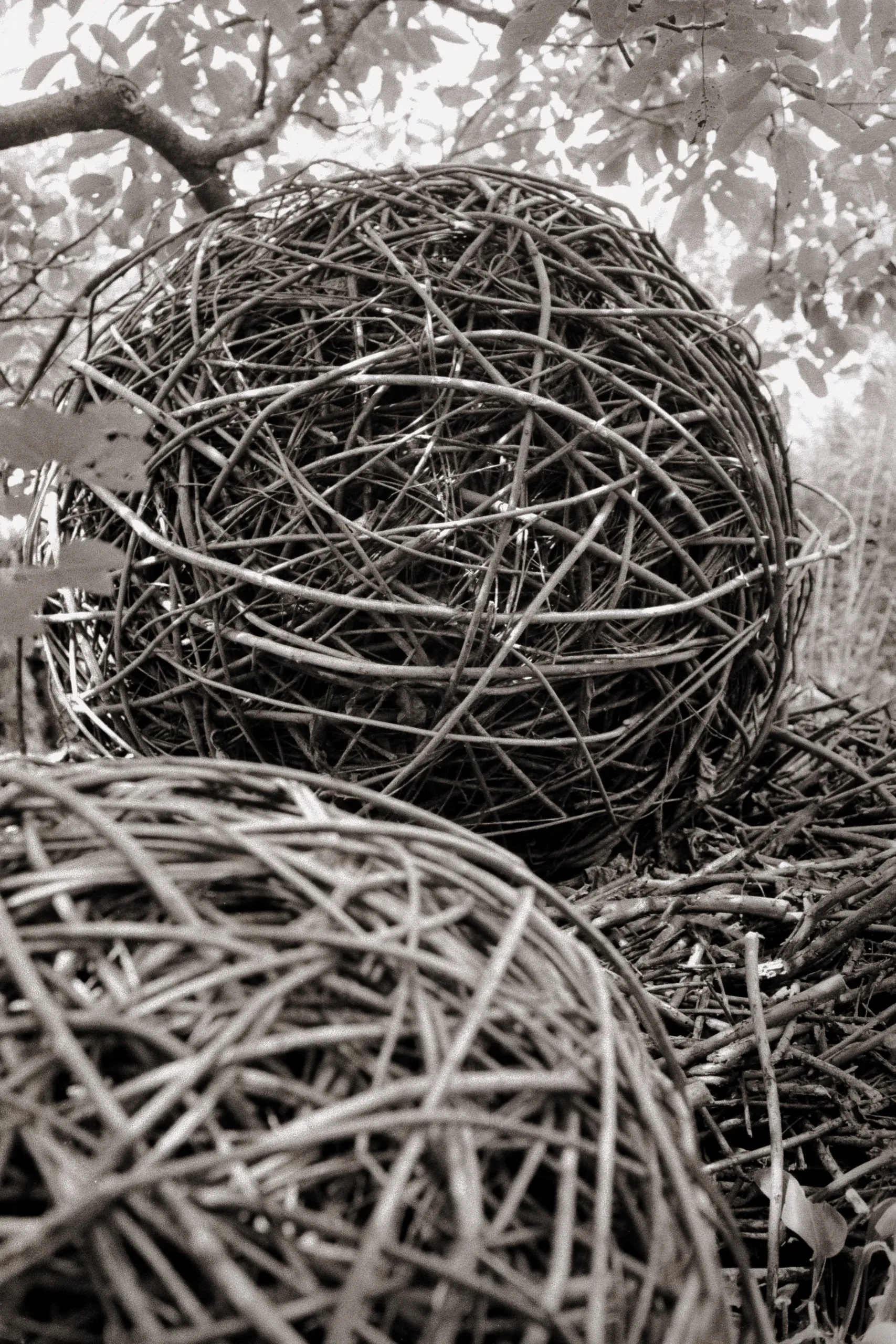
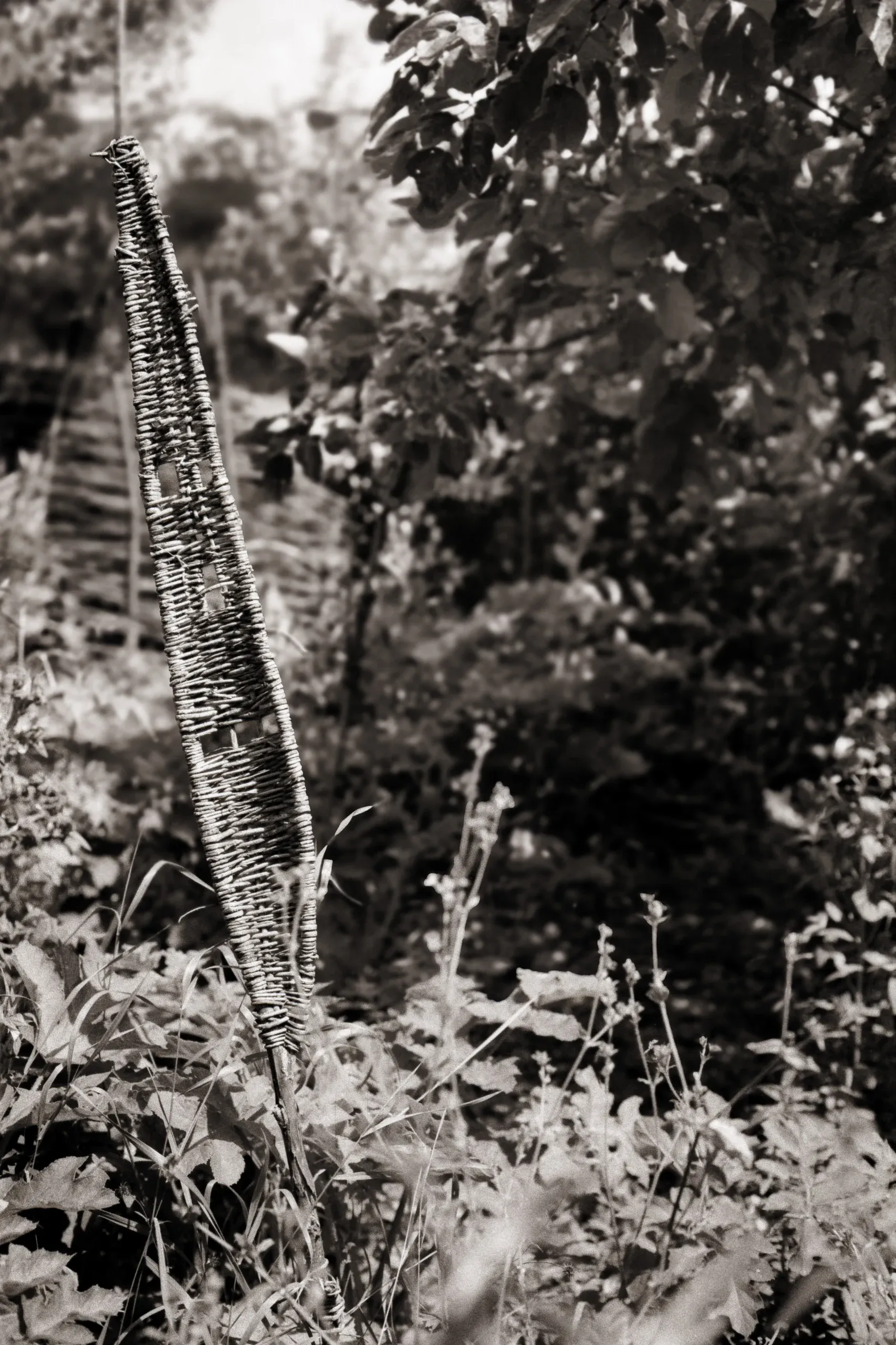
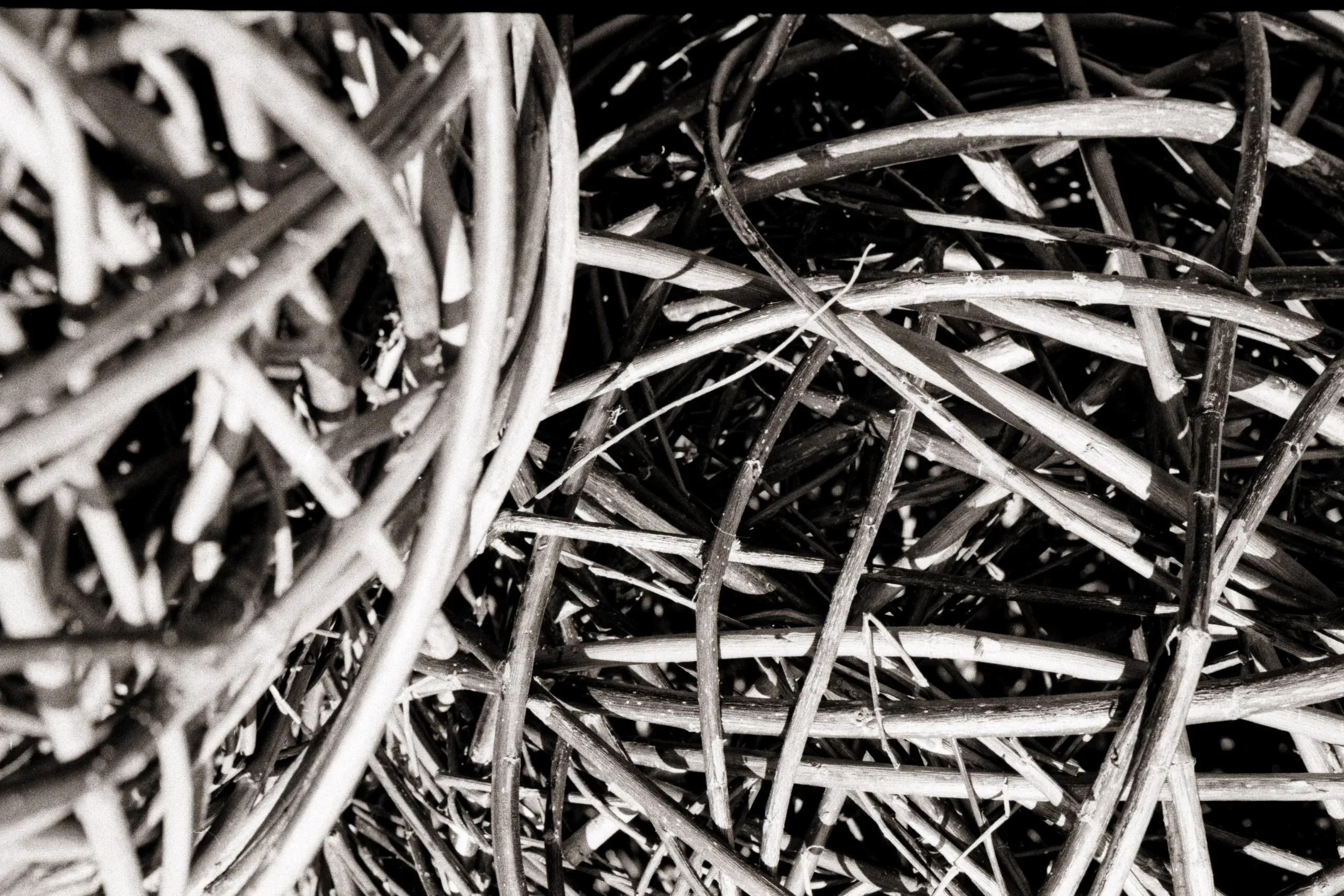
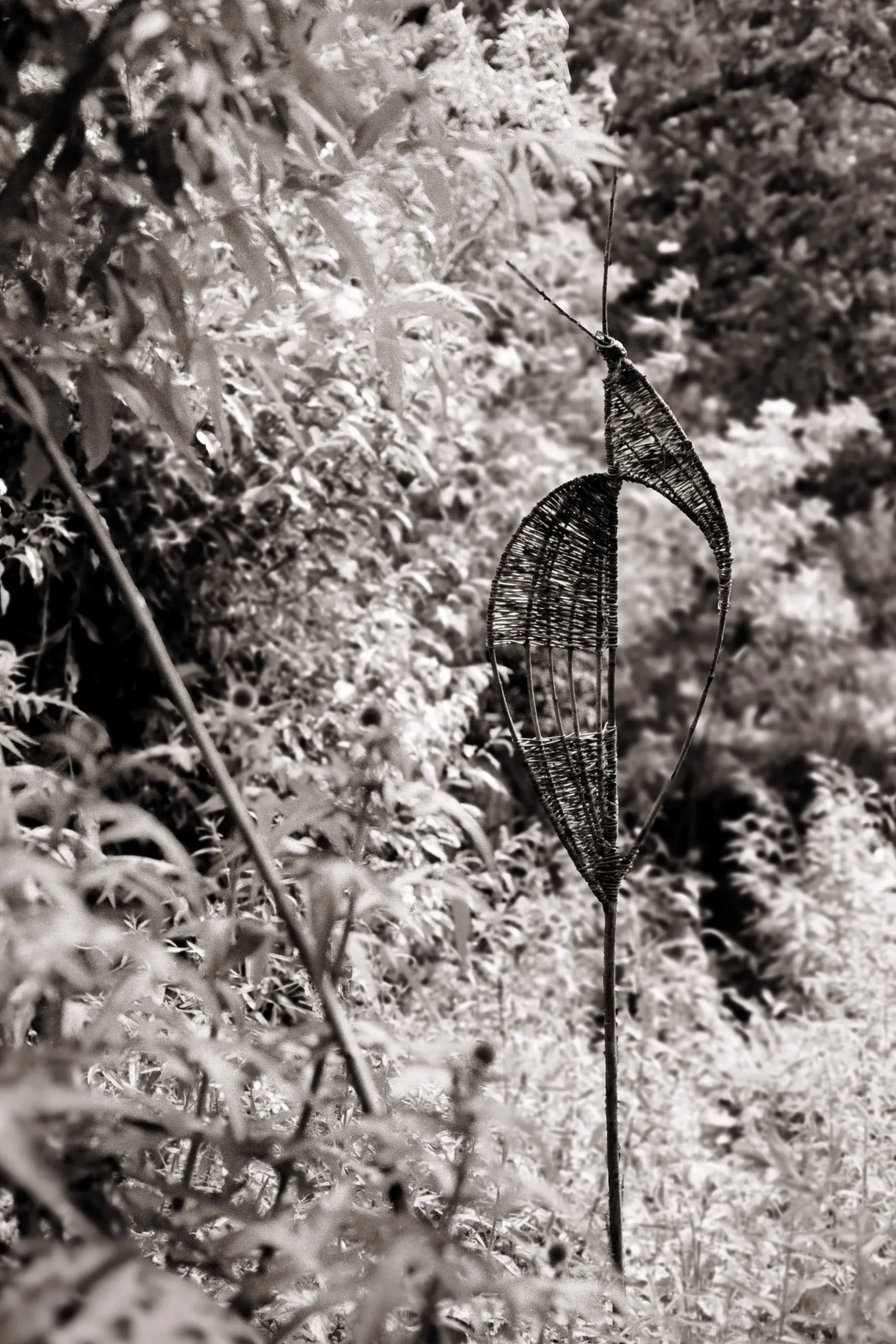
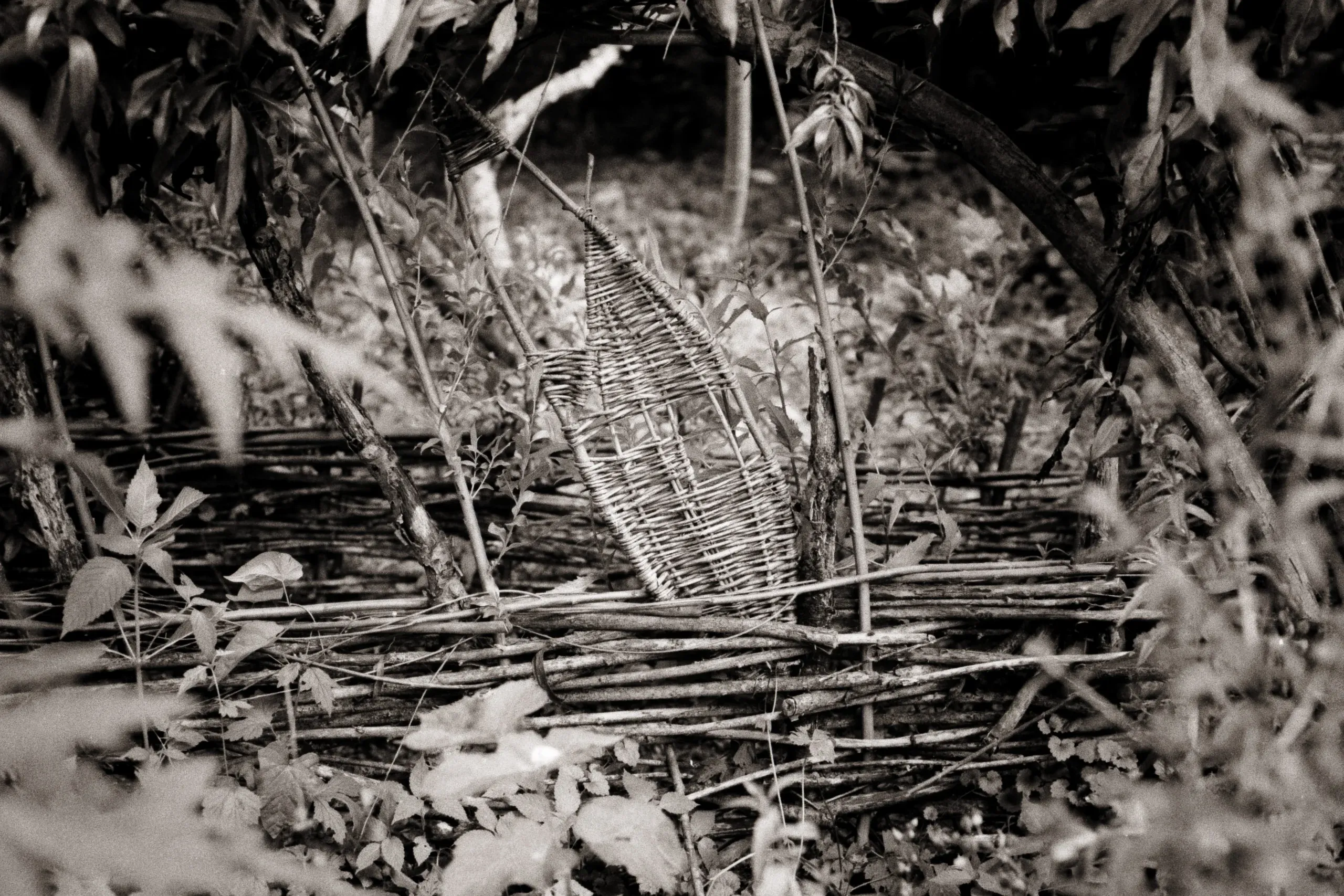
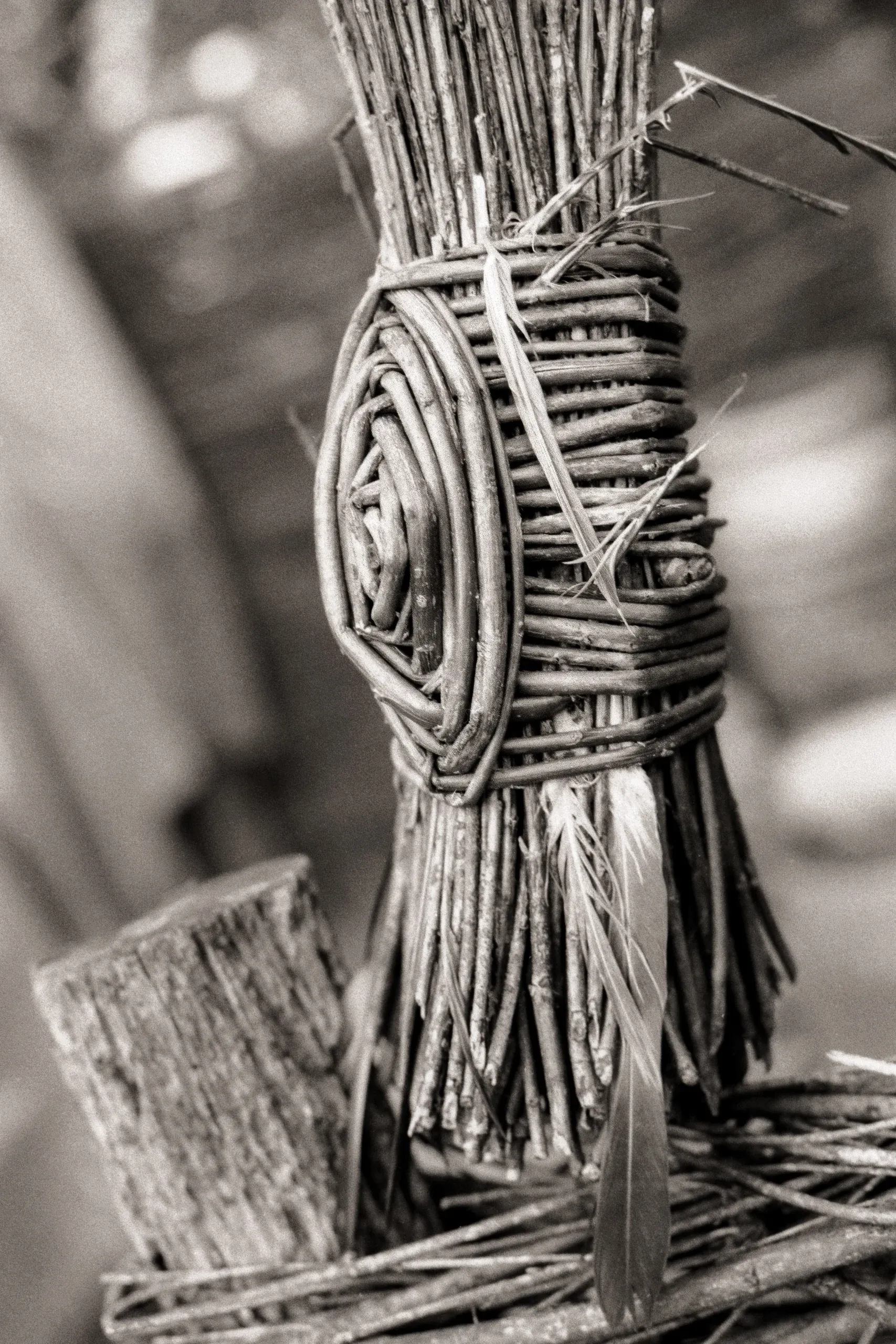
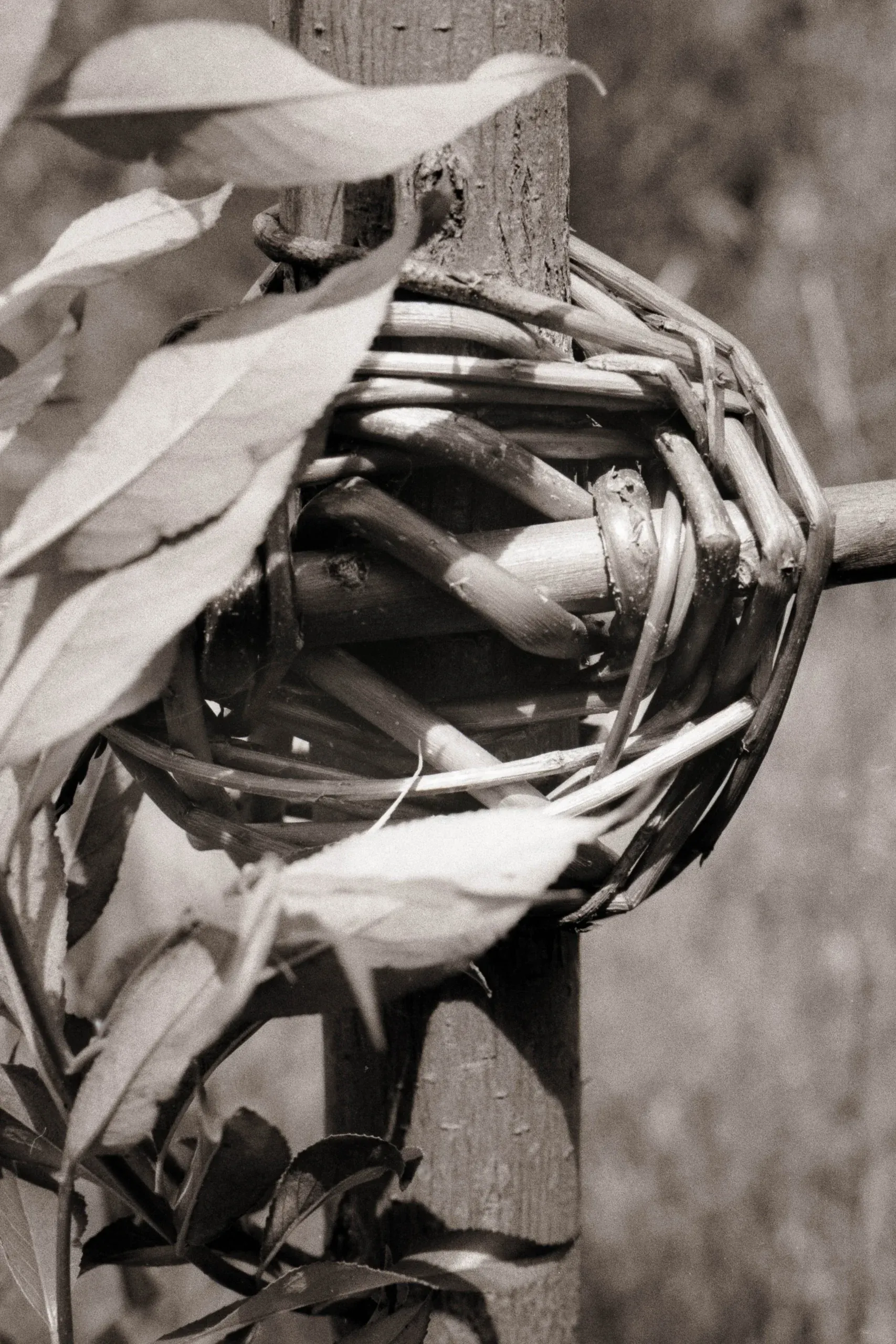
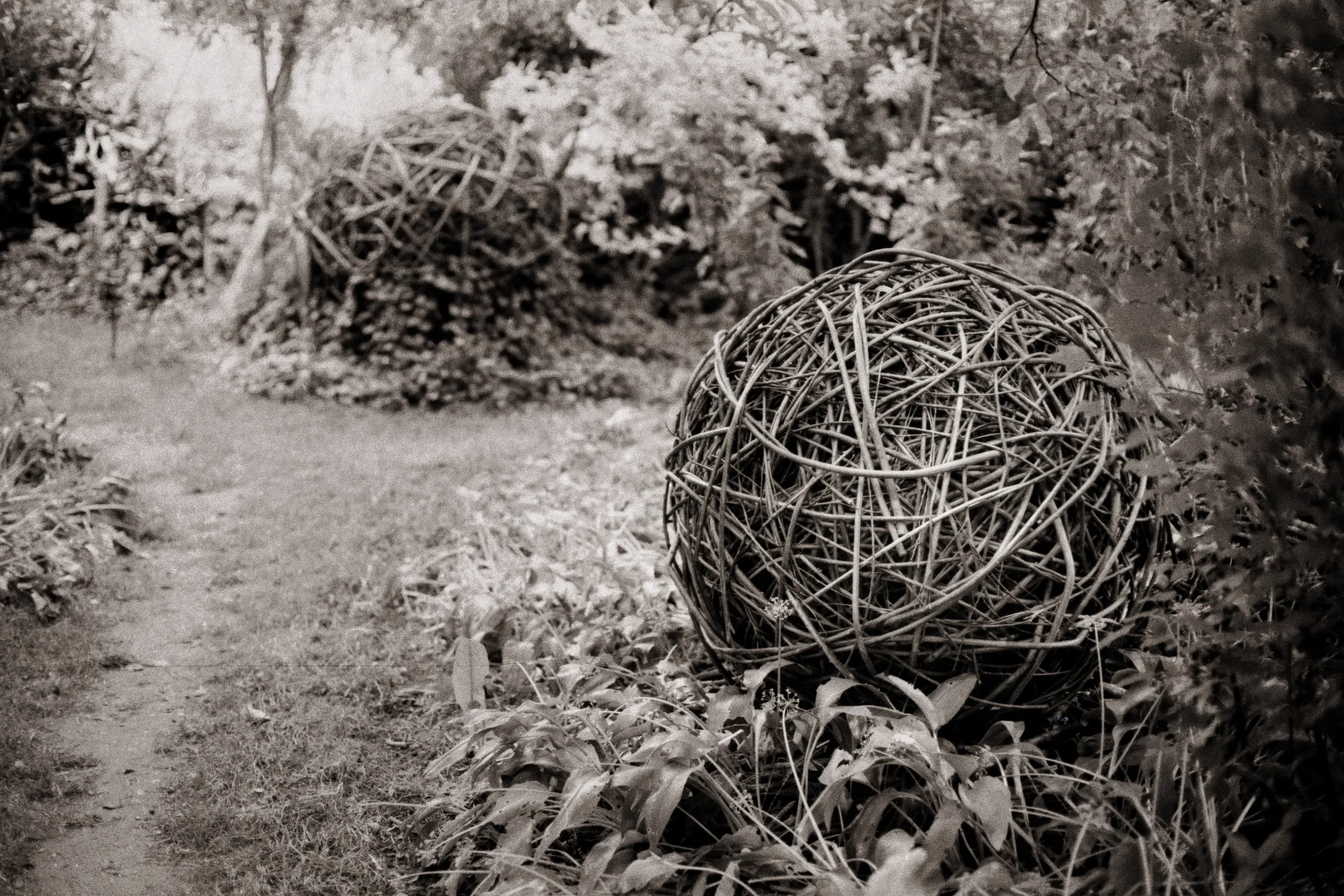
Klaus designs natural gardens and works with willow, natural stone, and reused materials. In his garden, you’ll find large woven spheres, slender, towering forms, and small details that invite you to take a closer look. The joints and twists reveal how the willow rods are guided and woven together.
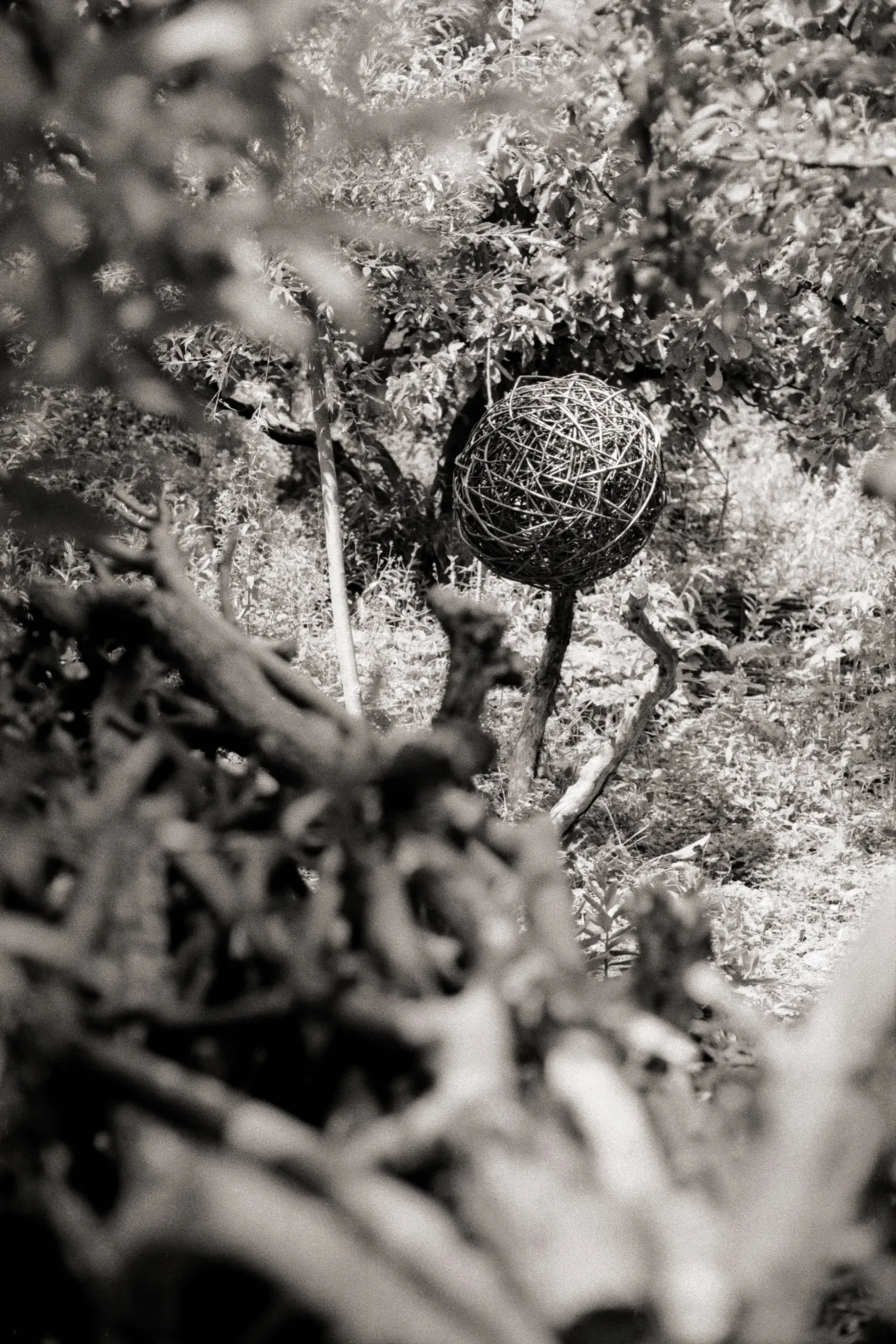
This presented a delightful challenge for my photos: a sphere made of twigs stands against a background of more twigs. In black and white, they can quickly blend into one another. I wanted to make the woven structures recognizable while still capturing some of the dense garden surrounding them in the frame.
In the photo of the sphere by the path, the softer texture of the background helps to reveal its round outline. In other images, twigs in the foreground remain out of focus, while the viewer’s gaze falls on a woven form in the background. The close-ups then focus on the light surfaces of the twigs, the dark spaces between them, and the directions in which the material runs. This allowed me to play with distance, framing, and sharpness without turning the garden scene into a confusing tangle.
From the Zenit to the Jobo to the Scan
I also wanted to try out the Lucky 400 on this occasion. After taking the photos, I developed the film on the Jobo in rotation and then scanned the negatives. The images shown here are therefore hybrid: shot and developed on film, then digitally processed.
I adjusted the scans to my liking. For me, adjusting brightness and contrast is part of the process of refining the final image. I wouldn’t, therefore, base a general assessment of the film on these shots. The results depend too much on the subjects, the light, the development, and my subsequent editing.
Above all, I enjoy being out and about with an analog camera and seeing what comes of it. Some negatives are later printed in the darkroom, while others remain as scans. Both have their place for me.
A Garden with Space for Animals
While taking photos, the focus was on the wickerwork. But the garden encompasses much more: deadwood and natural stone, wild shrubs and roses, meadow areas, and small ponds. They create diverse habitats for insects, birds, and other animals. It’s precisely this interplay between design and space for nature that I love about Klaus’s garden.
Nature conservation and insect protection are important to me. That’s why, in addition to the photos, I’d also like to recommend NaturGarten e.V. to you. There you’ll find inspiration for nature-oriented gardens and the people who are dedicated to them. Information about Klaus’s garden and his 2026 open house is available from the Bergisches Land Regional Group.
Photos from the visit